When I joined Sunderland Software City in 2021, digital accessibility felt like it lived in a small box. It sat alongside legal checklists, audits and risk management that felt more like an obligation but rarely inspiring. In 2026, that box is getting harder to find.
People have spent a few years living more of their lives through digital services and they now notice when something is unnecessarily difficult. Regulation and expectation are catching up too. But the bigger shift is cultural: accessibility is starting to look less like a constraint and more like a marker of care, quality and competence.
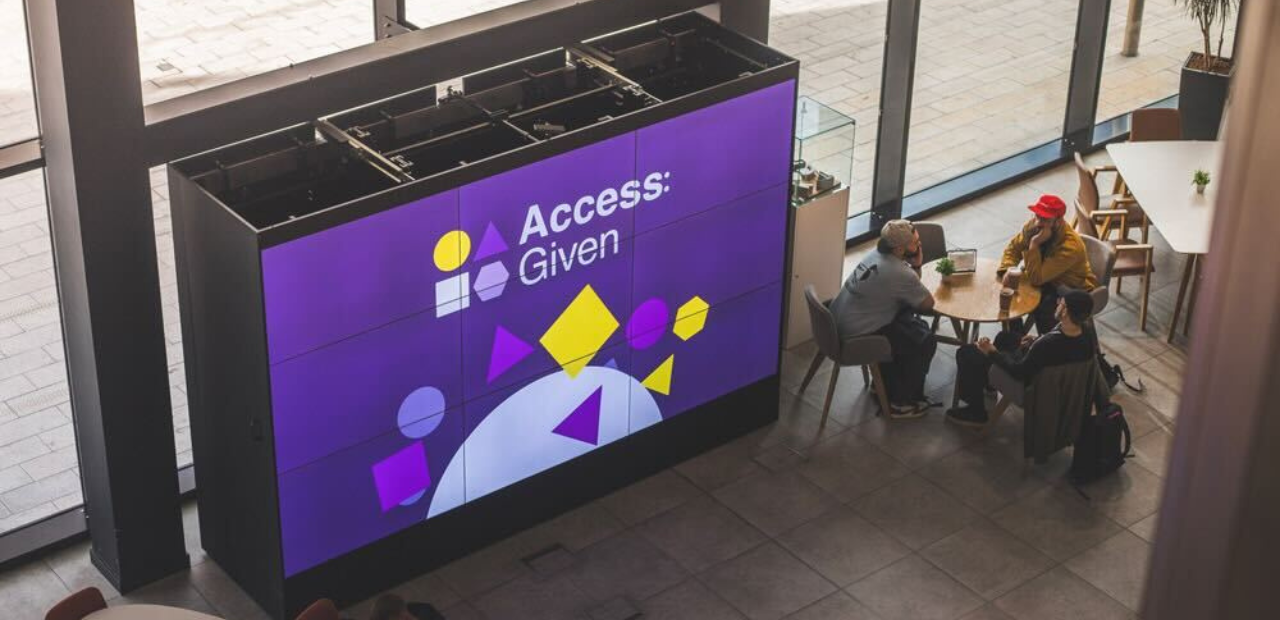
That is why I am really looking forward to attending this year’s Access:Given conference, a one-day digital accessibility conference in Newcastle on Wednesday 13th May 2026, hosted at the Catalyst Building.
The headline positioning is simple and ambitious: ‘creating a space where accessibility is a given’, not something people have to request, justify or fight for.
Why Accessibility Is Becoming Everyone’s Business in 2026
There is still a version of the accessibility conversation that starts and ends with compliance. That framing has its place, because duties exist and the harm of inaccessibility is real in many industries.
But when accessibility only lives in a defensive posture, it stays late in the process and chronically underfunded. It becomes remediation applied to whatever has already been built.
A more useful question to ask now is: “what changes when accessibility is treated as part of product strategy from day 1?”
When the answer is “it improves everything”, it stops being a niche concern and starts being a leadership concern. The better teams tend to design for accessibility by default, because the benefits rarely stay neatly contained within a single user group. The same way curb cuts make pavements easier for wheelchair users, but also for people with prams, cyclists and anyone hauling luggage, accessible digital choices often improve the experience for everyone. Clear labels, sensible structure and good alt-text help people using assistive tech, but they also make services easier to scan, easier to navigate and easier to find.
So one thing I appreciate about Access:Given is that the event design reflects that same thinking. The organisers are building in no overlapping speakers to reduce decision paralysis, breaks between sessions, a sensory space and an open-door policy for late arrivals and early leavers (we love a good Irish goodbye).
What to Expect at Access:Given 2026
This year’s current speaker line-up and their blurbs already suggests a mix of perspectives that should make for an excellent discussion of my aforementioned points, so I know I’ll be in good company! Here’s a taste of what’s planned for the conference:
Accessibility Inside our Organisations (Lisa and Matisse)
Lisa and Matisse are tackling accessibility within our own workplaces and internal communications.
Accessibility has to start inside our own organizations. It can’t just be something we focus on externally. If our internal emails, meetings, documents, and systems aren’t accessible, we’re creating barriers for our own colleagues. This isn’t a bonus feature. It’s how we build strong, resilient organizations. When people can fully access information and participate in decisions, we reduce risk, improve performance, and create workplaces where everyone can contribute.(Matisse)
Accessibility isn't somebody else's problem and disabilities aren't always obvious. 1 in 4 people in the UK identify as having a significant disability. 1 in 10 people are dyslexic, 1 in 12 men and 1 in 200 women are colourblind, and the tech industry in particular has many neurodiverse folk. Many have not disclosed their conditions and you might not know - but accessible information is better for everyone! (Lisa)
Accessibility is Not a Plug-in (Martin)
From what I have seen so far, Martin’s talk will challenge the idea that accessibility can come neatly packaged and ready-made.
"There’s no such thing as an accessible component library. Components may pass manual and automated checks, but accessibility is determined by how they are combined, configured, and used in the context of a real product.” (Martin)
If You Can Make It to Access:Given 2026
Access:Given is happening on 13th May 2026 at the Catalyst Building in Newcastle. If accessibility is part of your remit or if you are realising it should be, it looks like a good place to learn, compare notes and come away with ideas you can apply into your own organisation. Tickets can be found here.
If you want a more immediate hands-on session, we are also co-hosting a free in-person workshop with Access:Given in Gateshead at the Northern Design Centre on Tuesday 24th March: Accessible Form Design in a Nutshell. It’s aimed at anyone who designs or builds forms, with a focus on planning accessible forms and implementing them with simple, semantic HTML.
I’m genuinely excited for Access:Given this year. Not just for the talks, but for the chance to be in a room with people who are trying to make digital services easier to use, easier to understand and less tiring for everyone. If you’re going along, I’d love to say hello and compare notes.